Geometry & Design
The Geometric Foundations of Palladio's Architecture
Andrea Palladio never explained his design method. This dissertation identifies its geometric basis — revealing that the equilateral triangle and the ratio 1: √3/2 were at the heart of his process.
Video Overview
Cracking Palladio's Code
A video introduction to the geometric methods at the heart of Palladio's design process.
“Relationships which were previously overlooked become obvious, such as those based on the ratio of an equilateral triangle's base to its height: 1: √3/2.”
Erik Anderson, Harvard GSAS 2024
Audio Overview
The Equilateral Triangle Code of Palladio
Listen to a narrated exploration of the key concepts and findings from the dissertation.
Infographic
Palladio's Geometric Design Tools
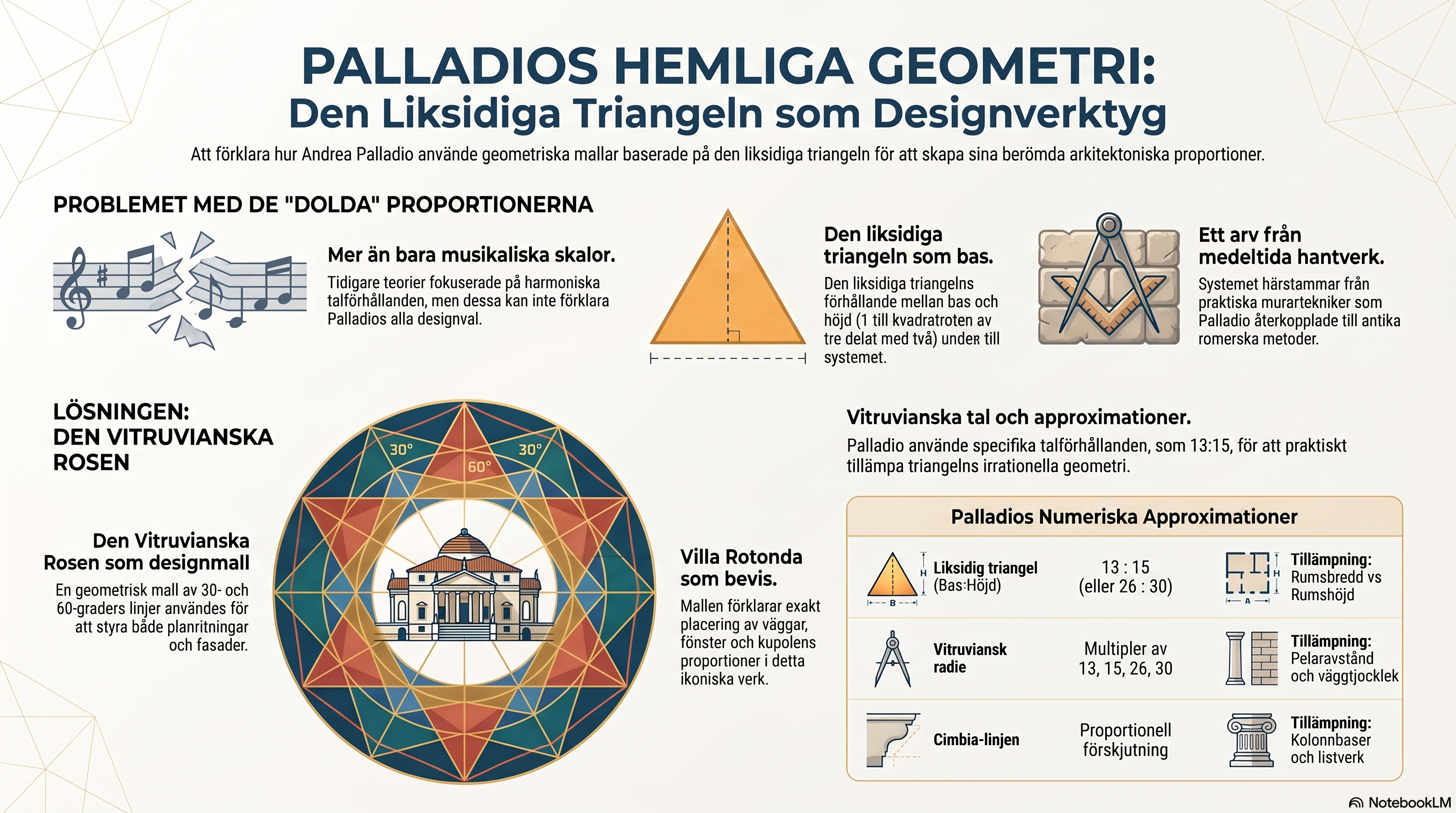
The Geometry
Discover how the equilateral triangle and its related forms were integral to Palladio's design process — a method that was ubiquitous yet hidden in plain sight.
Explore the Primer→Case Studies
From the five orders to Vitruvian temple types, from Palladio's own buildings to his reconstructions of ancient Roman architecture.
View Case Studies→Community
Join scholars, students, and architects in discussing Palladian geometry, sharing findings, and advancing our understanding.
Join the Discussion→Beyond Palladio
This research demonstrates that geometric templates based on the equilateral triangle were common practice among pre-modern architects — from ancient Roman builders through medieval master masons to Renaissance architects including Vitruvius, Villard de Honnecourt, Serlio, Vignola, and Scamozzi. The methods and principles demonstrated are of interest to historians, practicing architects, and anyone curious about the history of design.
Read the Full Dissertation at Harvard Library →